One building, several roofs, several owners' expectations
Mixed-use is the category where a single structure stops behaving like one roof. Retail at the street, offices or apartments stacked above, parking worked into the base — each use brings its own schedule, its own mechanical loads, and its own idea of what a failure costs. We work on these projects in Billings as downtown keeps adding density along Montana Avenue and the historic core, and as adaptive-reuse and new infill bring storefronts and housing under the same roofline. The job isn't to cover a flat plane; it's to manage several different waterproofing problems that happen to share a footprint.
The roof you walk on isn't always a roof
The biggest trap in mixed-use is treating a podium deck like flat roofing. The podium — the slab between retail or parking down low and the ial or office floors above — is an occupied, loaded, often landscaped surface. It needs a traffic-bearing waterproofing assembly: the membrane itself, a drainage composite, a root barrier under any planters, and an insulation and load path coordinated with the structural engineer. A standard roofing membrane dropped onto a plaza or amenity deck looks fine for a few years and then fails under the planters and pavers, where it's a demolition project to get back to it. We keep that distinction sharp from the first walk-through, because confusing the two is how mixed-use projects turn into litigation.
Distinct roof areas we typically find on one development
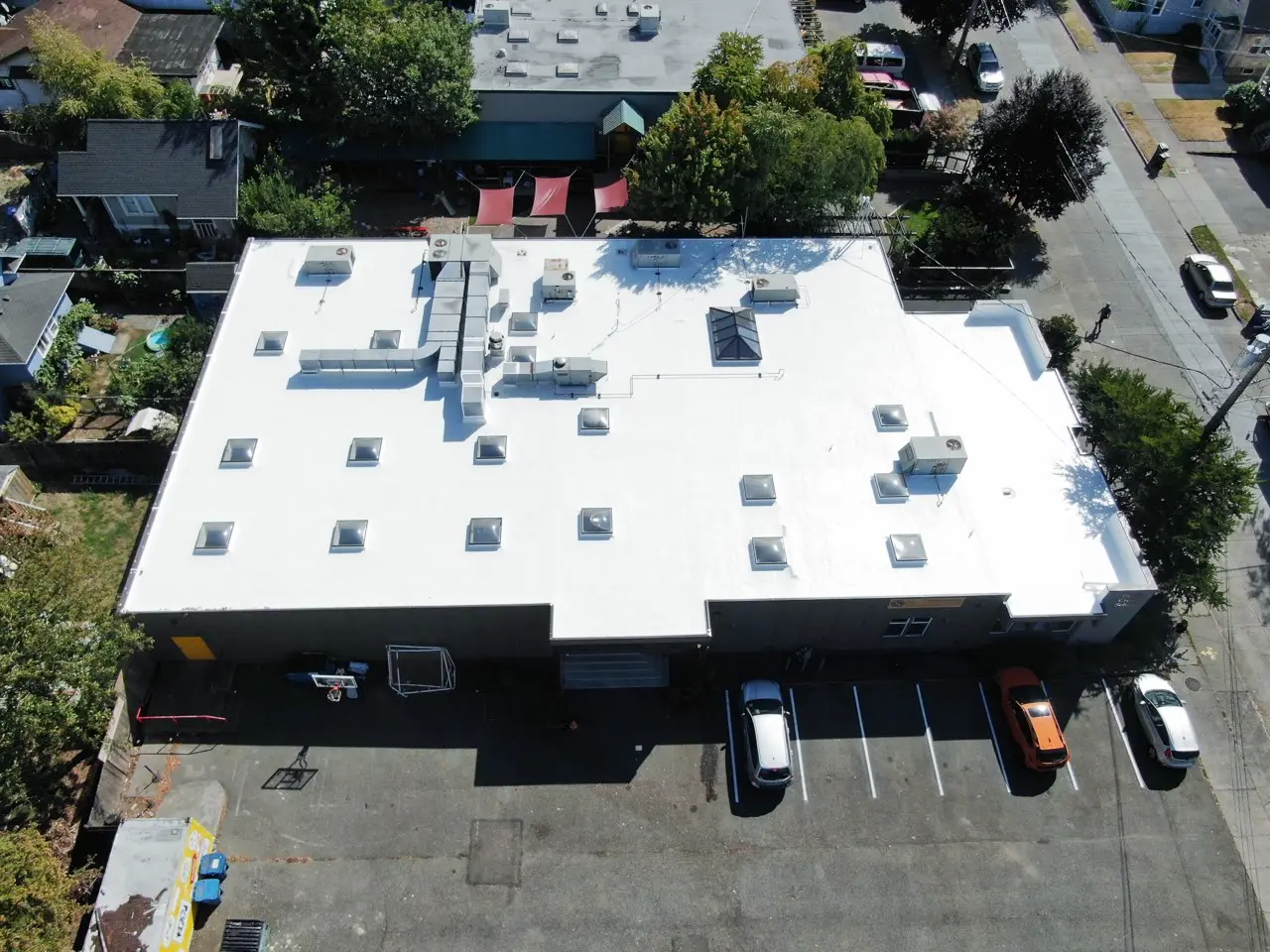
- Low-slope membrane over the commercial floors and back-of-house
- Podium or plaza deck waterproofing between stacked uses
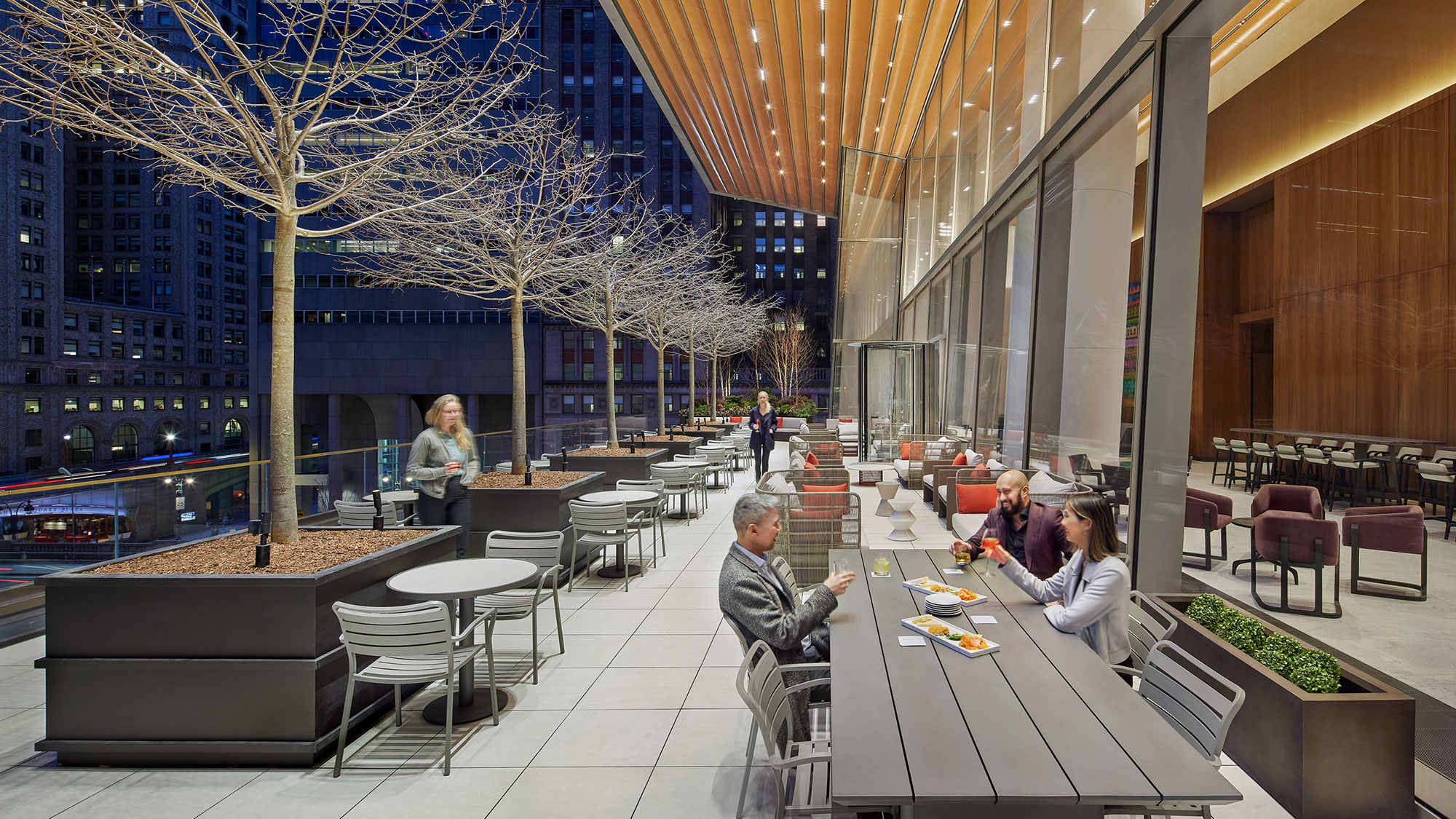
- Rooftop amenity decks with a traffic-bearing assembly under the finish
- Parapet and penthouse flash-through details on the ial tower
- Parking-structure waterproofing integrated into the base
The top of a ial tower has its own list
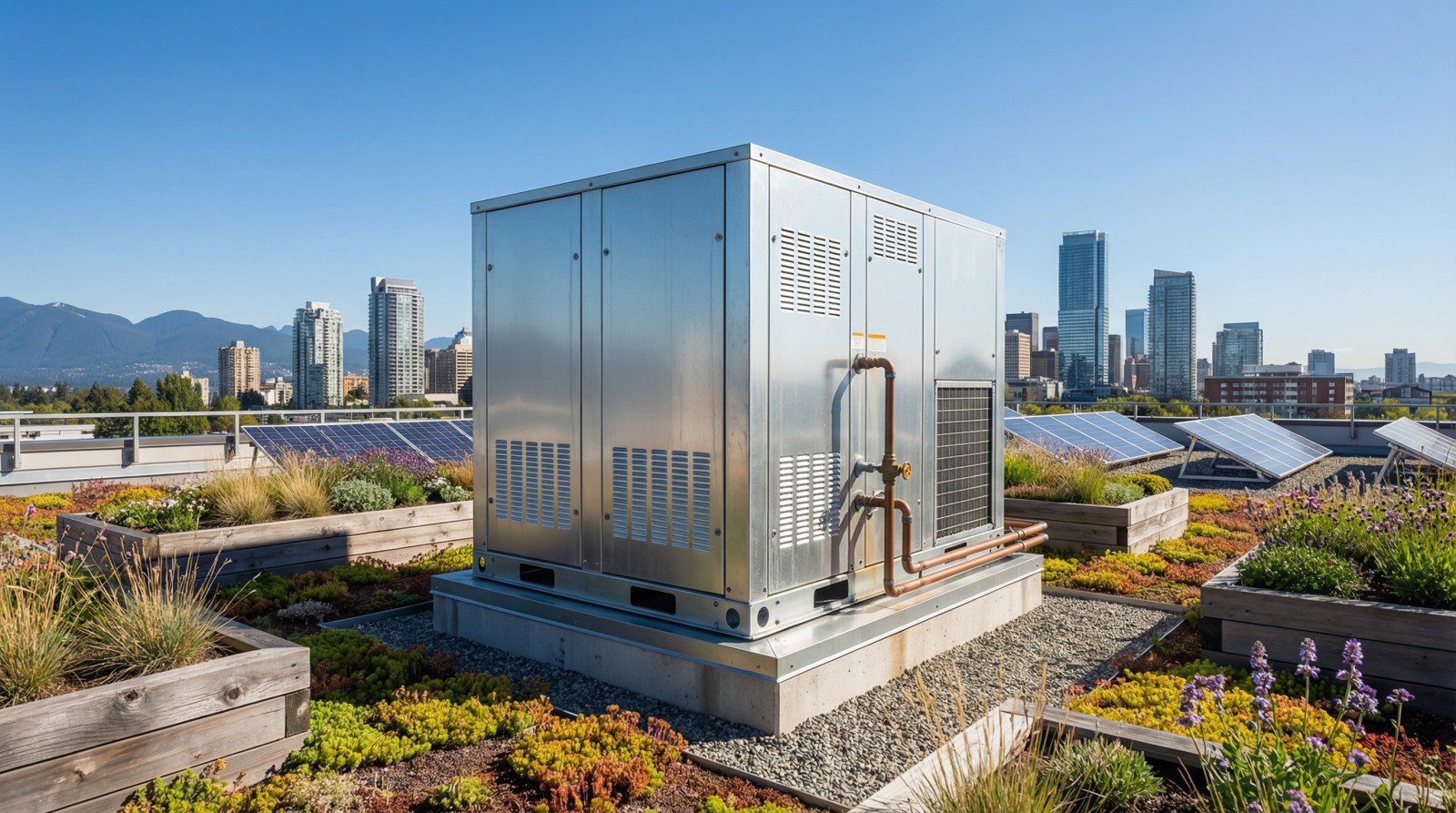
Above the housing floors the problems shift again. You're dealing with parapet drainage, mechanical-penthouse flash-throughs, elevator overrun and equipment-room enclosures, and any rooftop amenity space the developer is selling as a tenant draw. Amenity decks especially get owners in trouble — they want a finished, walkable surface, which means a traffic-bearing waterproofing layer under the pavers or decking, not a membrane meant for occasional maintenance foot traffic. We specify, install, and warranty those assemblies in coordination with the deck-finish contractor and the structural engineer of record.
Who all the warranties belong to
Because the areas differ, the warranties differ, and on a mixed-use building that coordination is real work. The retail membrane, the podium deck, and the amenity assembly may carry separate manufacturer warranties with separate terms and separate inspection requirements, and a lender or developer wants them aligned and registered to the right party at closeout. We track that from the start — which system covers which area, who holds each warranty, what each manufacturer requires for their rep inspections — so the building's file is clean and there's no gap where one trade points at another when water shows up at a transition.
Building it while people live and shop below
Most mixed-use roofing in Billings happens over occupied space — a downtown building doesn't empty out so we can work. That puts real constraints on the job: noise and working-hour limits in a ial core, access that has to stay clear for ground-floor retail, dust and debris containment over public sidewalks, and fall protection for work at height above places where the public walks. We build a phasing plan before mobilizing, confirm watertight dry-in in writing at the end of every day, and coordinate elevator and common-area access with building management so s and tenants aren't blindsided. We don't pull off a section until it's watertight.
Snow and water moving between levels
A stacked mixed-use building in Billings sheds snow and water from level to level, and the transitions are where it goes wrong. Drifts collect on a lower roof or a setback terrace against the taller tower wall, meltwater from an upper roof discharges onto a lower one, and the overflow path has to be deliberate rather than accidental. We design the drainage so an upper-level scupper or drain doesn't just dump onto an amenity deck or a lower membrane and overload it, route overflow through the structure rather than over an occupied terrace, and detail every level-change and wall-to-roof junction for the freeze-thaw cycling these joints take all winter. On a building where a leak lands in someone's apartment or a tenant's storefront, the transitions get the same attention as the main fields.
Phasing several roofs as one project
Even though a mixed-use building carries several distinct roof areas, the work usually has to read as one coordinated project to the owner and the building's occupants. We sequence the commercial membrane, the podium deck, and any amenity or tower roofs so that crews, cranes, and material hoisting don't collide with retail deliveries below or block ial access, and so each area reaches a watertight state before we open the next. Staging on a downtown site is tight — there's often no lay-down yard, just a sidewalk and a loading zone — so the logistics plan and the hoisting windows get worked out with the GC and building management before anyone mobilizes. Treating the areas as one schedule, rather than a string of unrelated little jobs, is what keeps a multi-roof building from being under disruption for months longer than it needs to be.
Working inside the project team
On new construction and major renovations, the roofing scope lives inside a larger team — the general contractor, the MEP subs, the structural engineer, and usually a building-envelope consultant. We're used to that. We work the submittal process, the waterproofing mock-ups, and the testing protocols that architects and owners put on mixed-use jobs, and we sequence our work against the other trades instead of fighting them for the deck. Lenders on these projects expect architect-reviewed submittals, manufacturer technical approval, mock-up testing, QC inspection reports, manufacturer rep sign-offs at the critical phases, and NDL warranty registration at the end. We deliver inside that framework.
Common questions
Why isn't a podium deck just flat roofing?
A roofing membrane is built for low-slope drainage and light maintenance traffic. A podium handles structural deflection, root intrusion from planters, standing hydrostatic pressure, and pedestrian or vehicle loads. It needs a traffic-bearing waterproofing assembly; a roofing membrane in that spot usually fails within a few years.
How do you work over occupied retail and ial space?
With a phasing plan set before mobilization, noise and dust controls, coordinated elevator and common-area access, and written watertight dry-in at the end of each day. Nothing gets left open overnight.
Do you handle rooftop amenity decks?
Yes. Amenity decks get a traffic-bearing waterproofing assembly under the finish surface, specified and warrantied in coordination with the deck-finish contractor and the structural engineer.
How do the warranties work across all those areas?
We map which system covers which area, register each warranty to the correct party, and track each manufacturer's inspection requirements so the building's closeout file is complete and consistent.